
Hello Fellow Art Detective! Let’s review all the evidence! Also follow along with the whole mystery on the main page for the painting. Here.
The Mystery of Esther
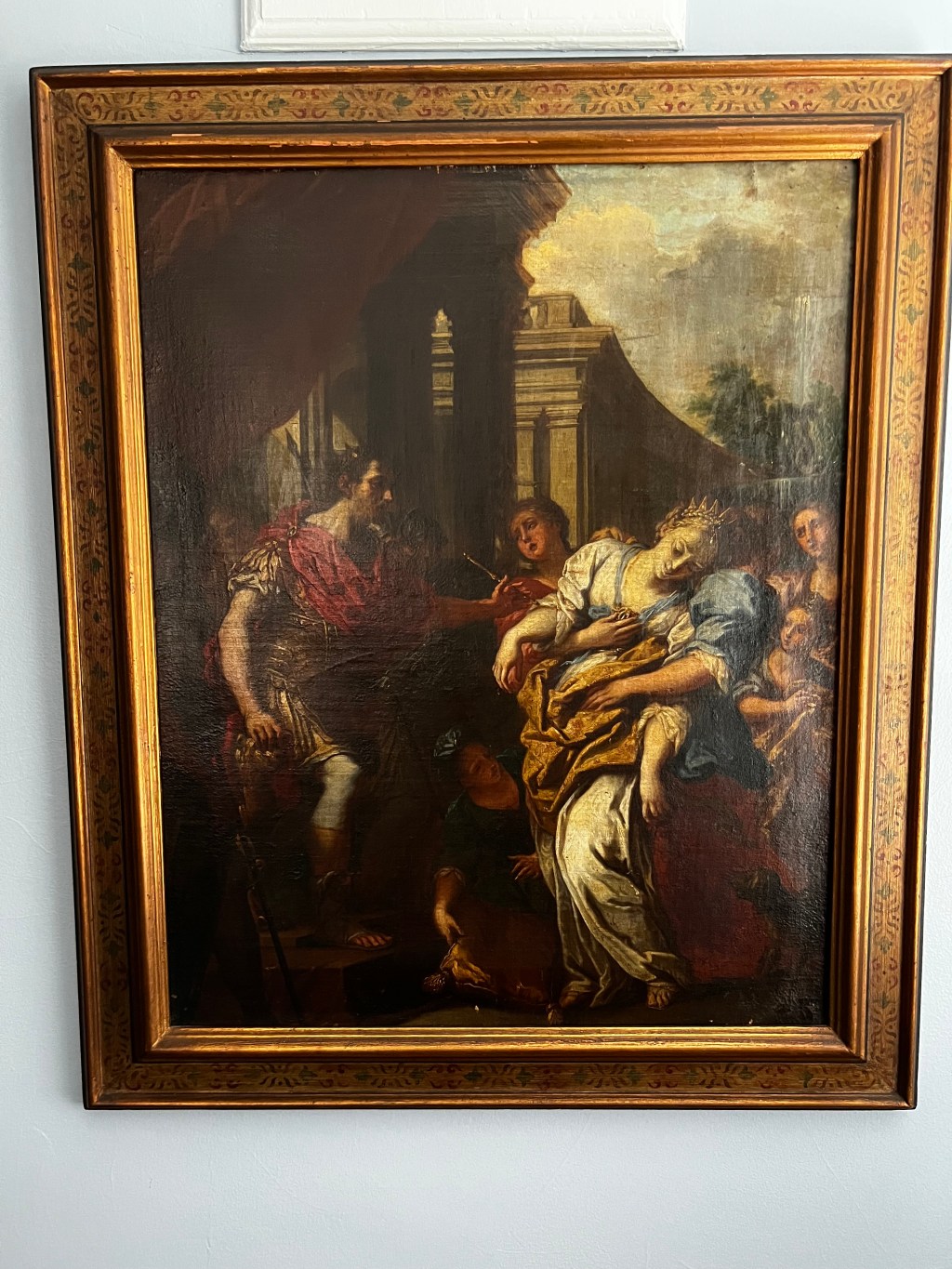
This painting was purchased at an estate sale in 2018, from a family who had owned the painting from at least 1964.[1] Below, I outline the known facts, documents, labels, and people. I also included suppositions, which will be explained with notes. When I am unsure, I note that too! I welcome any and all thoughts on these notes!
Dates and Nationality of Artist:
The painting has been examined by several curators who are experts in this time period, including Lester Cooke (1916-1973), a National Gallery art curator who was known as the Sherlock Holmes of Art History! Additional notes from the current conservation report as of March 2023, confirm the opinions of these curators. These voices agree on a supposed date in the range of 1660-1720. They also agree that this is an Italian artist. The painting contains elements that suggest Venetian origin. However, Lester Cooke suggested Roman artists. Of course, the stylistic elements of artists working out of these cities crossed cultural boundaries during this time. It is most likely that the artist in question trained or traveled to both locations during their artistic careers.
Subject:
When we purchased this work, we recognized it as a scene from the bible, in which Queen Esther swoons, or faints, in the presence of King Ahasuerus. There seems to be little doubt that this is what the scene represents.[2]
Owners:
Martha Bowditch Alden (1912-1996): Martha was married to Douglas William Alden (1912-1998). Interestingly, William taught at my alma-mater Sweet Briar College and was the director of their Junior year in France program!
A label on the back gives us the owner Miss Grace Billings. After exhaustive research, I have confirmed that Grace Billings (1888-1970) of New York, who remained unmarried, was the great aunt of Martha Douglas Alden, who we know owned the painting between 1964-1994.[3] It is most likely that Martha inherited the painting from Grace at some point before or around 1964.
We have no owner information prior to that. We cannot confirm any information prior to 1964. Based upon its last restoration, the painting was likely restored in Europe in the 19th century.[4]
Documents:
As most art historians know, the first thing to do when researching a piece of art is to examine any labels on the back of the painting or any provenance papers that accompany it:
- We have a label pasted on the back of the frame from the Wadsworth Atheneum in Hartford, CT. This label tells us a few things. First it most likely confirms the painting was exhibited at the Wadsworth Atheneum at some point.[5] The first thing it gives us is that the artist is unknown, 18th century and Italian. To these points, we might suggest that the 18th century suggestion is not too far off as most experts who have examined the painting have suggested a date of 1660-1720. It gives us no title, but it does give us a name. Miss Grace Billings.
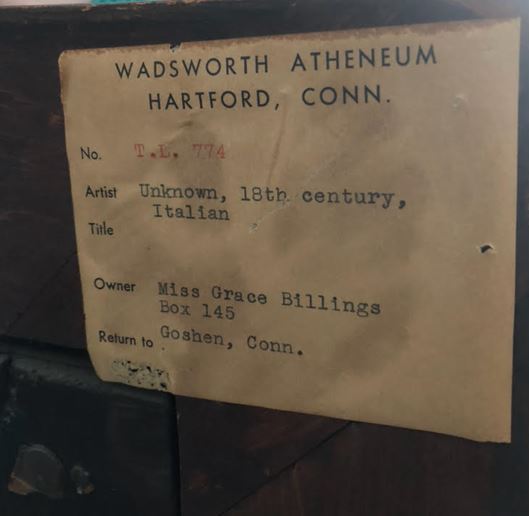
The label also gives us a loan number (T.L stands for Temporary Loan) 774. Unfortunately, the registrars at the Wadsworth (despite good efforts) were unable to locate records of this loan or of the donor Grace Billings. Though all of the facts we do have regarding Grace’s life and the style of the label suggest an exhibition date in the 1950s.
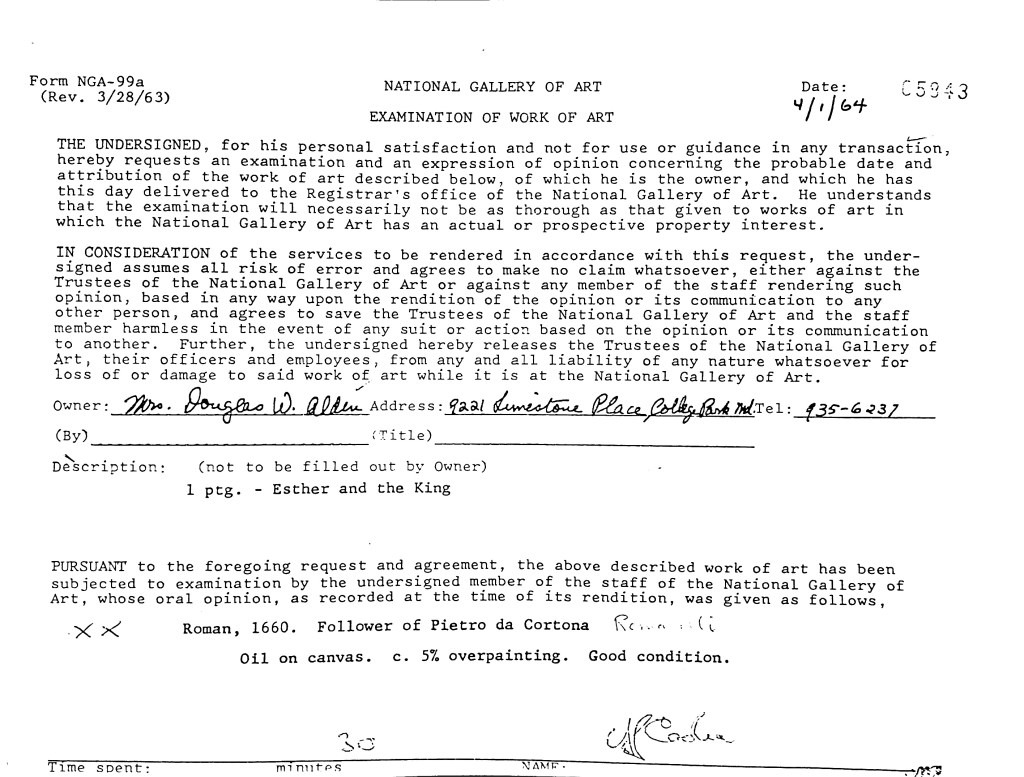
2. Report from the National Gallery in 1964, where the painting was examined when owned by Martha Bowditch Alden.
The next document we have is this examination report from the National Gallery of Art in Washington D.C. It tells us that Martha took the painting to NGA in 1964 where it was examined by Curator Lester Cooke.
This document tells us a few things! April 1st, 1964, Lester Cooke spent 30 minutes examining the painting. The typed response was that the work was Roman, c. 1660, was by a follower of Pietro da Cortona (c.1596-1669), was an oil on canvas, contained 5% overpaint and was in good condition. The supposition is that Lester Cooke signed his name in pen and wrote beside Pietro da Cortona the name Romanelli.[6] In this Cooke likely refers to Giovanni Francesco Romanelli (1610-1662), a student of Cortona.
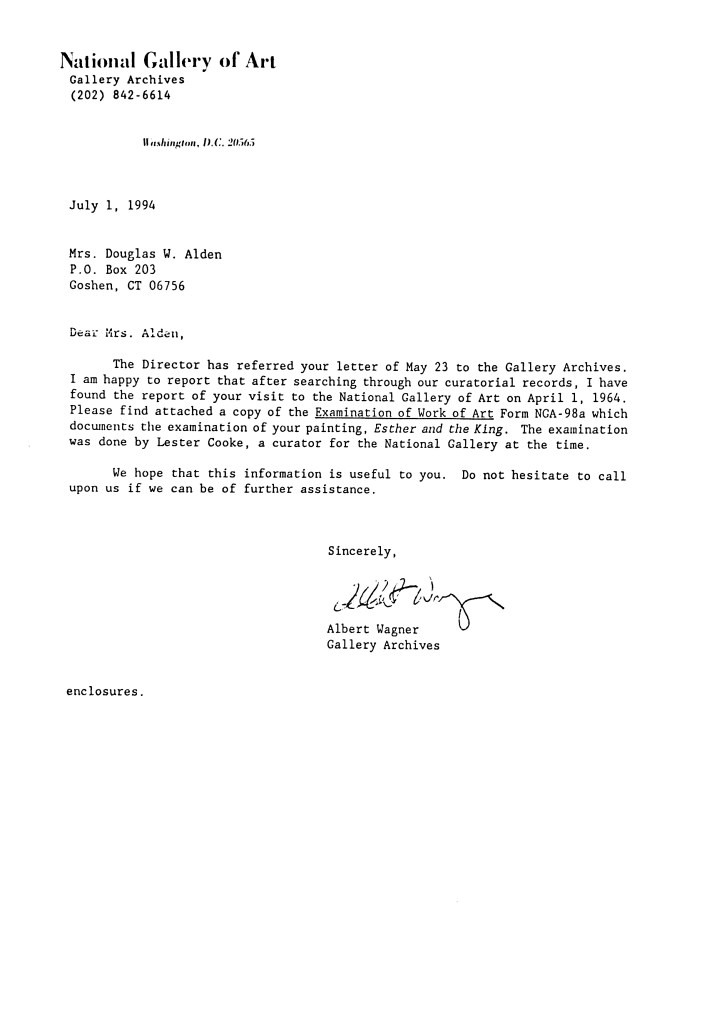
3. In 1994, Martha contacted the National Gallery and requested the picture and records from her 1964 visit. Here is the letter confirming her 1964 visit.
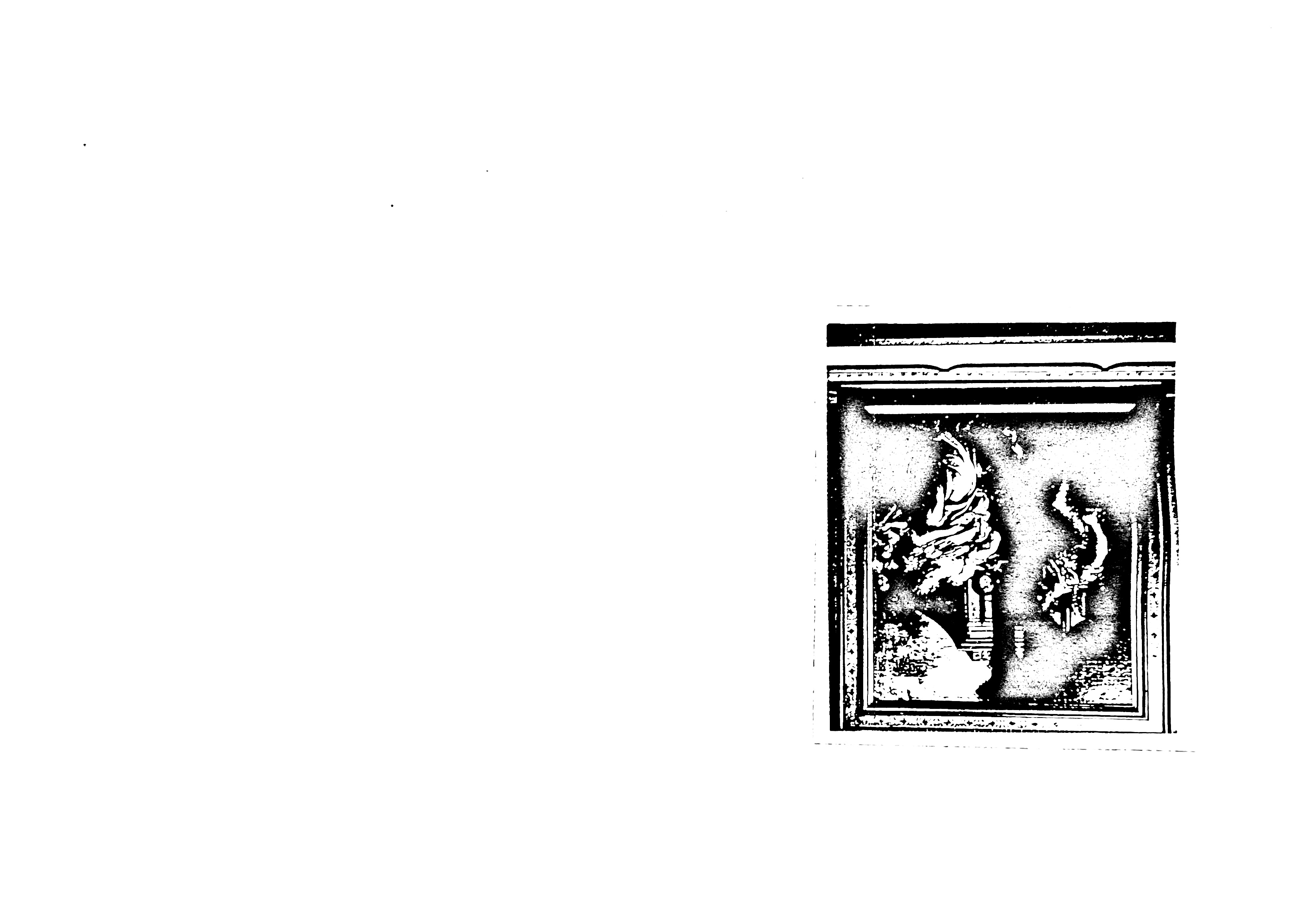
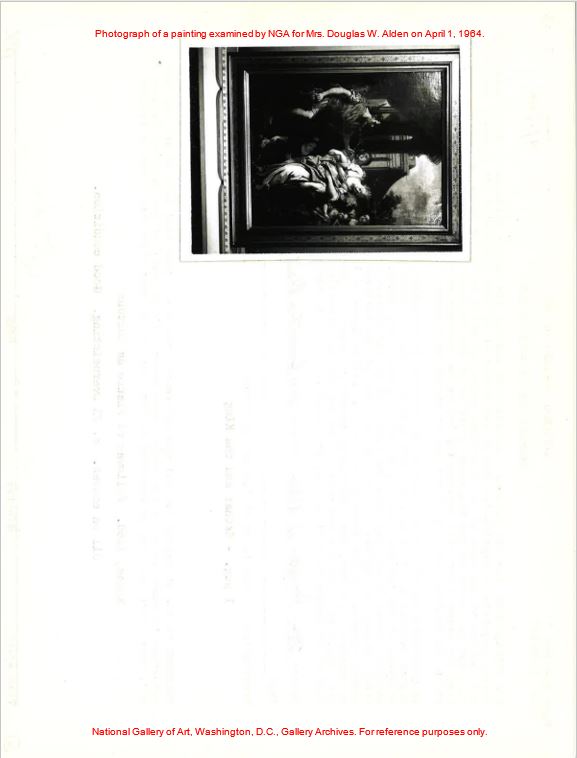
4. In 2018, I contacted the archives at NGA and was given a photocopy of the original photograph taken in 1964. As you can see, it gives us a much clearer image of the painting! It also confirms that the painting was in the same frame in 1964.
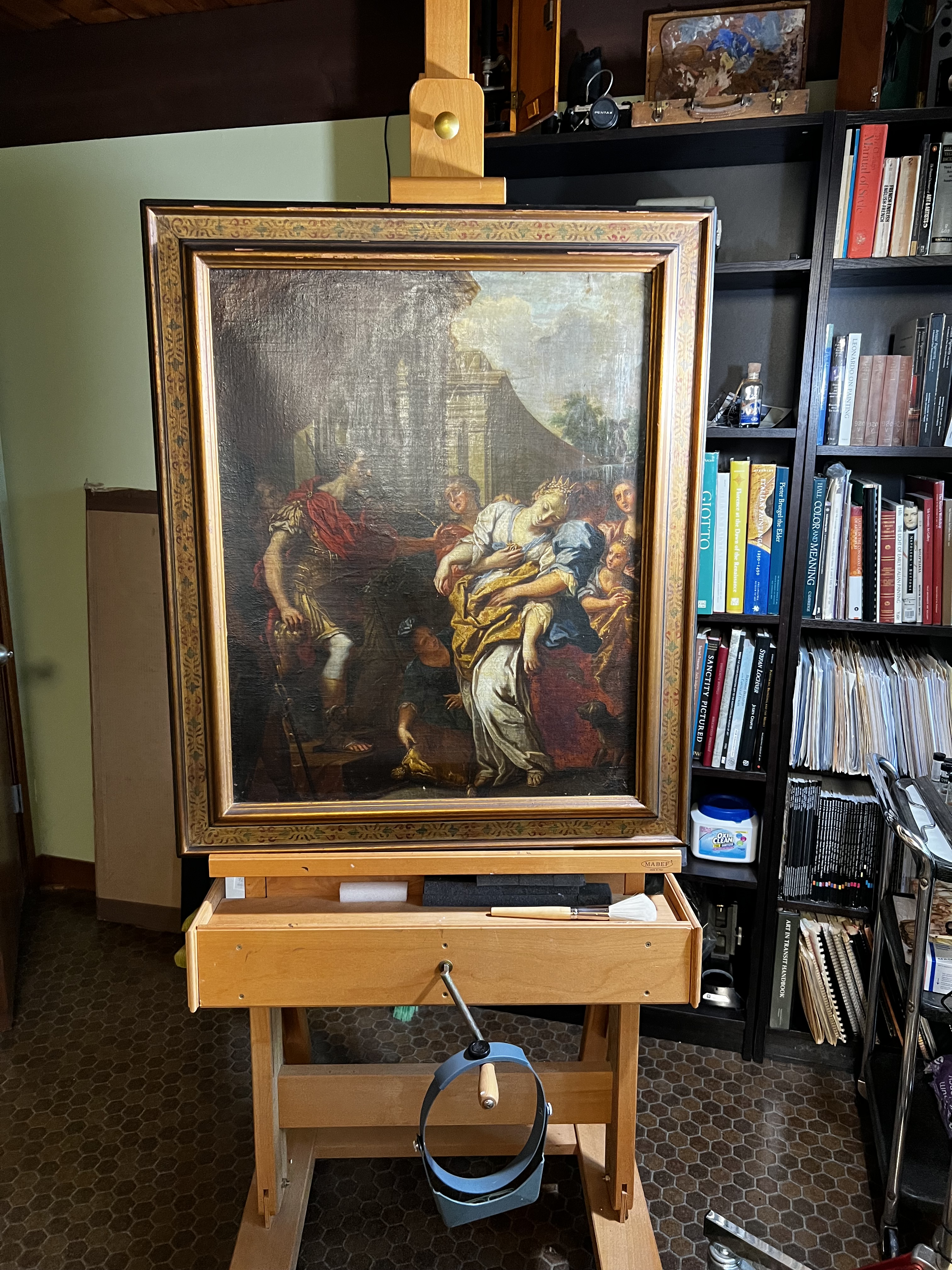
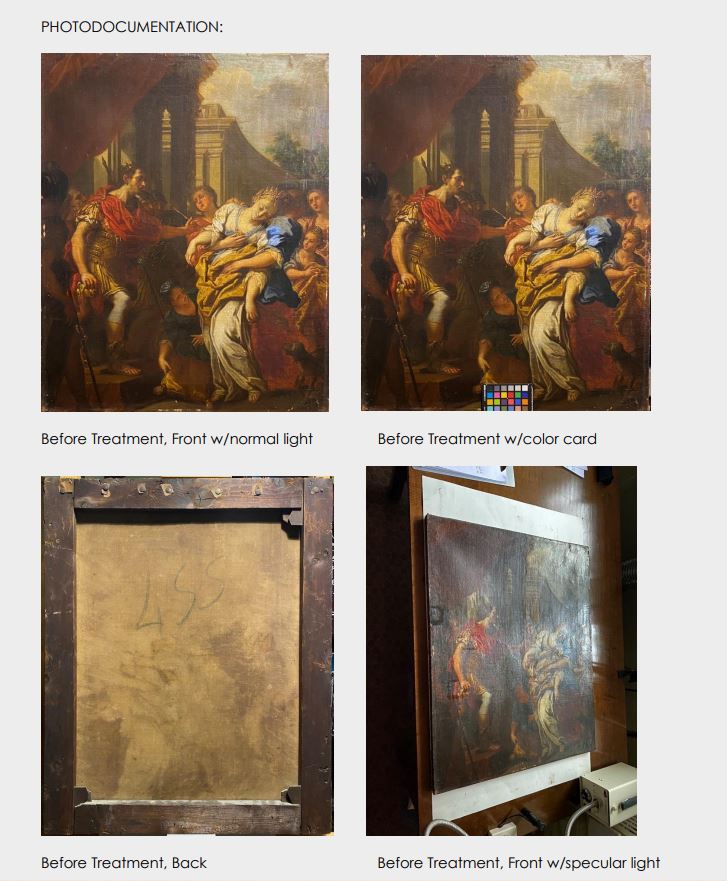
5. Condition Report March 2023-Photos from a private conservator working on the cleaning.
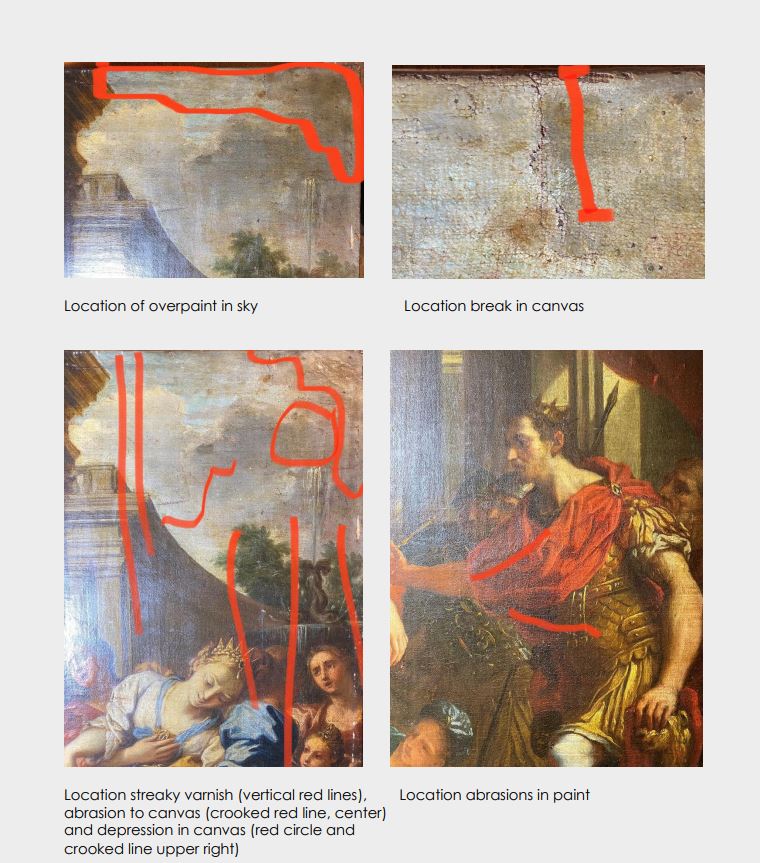
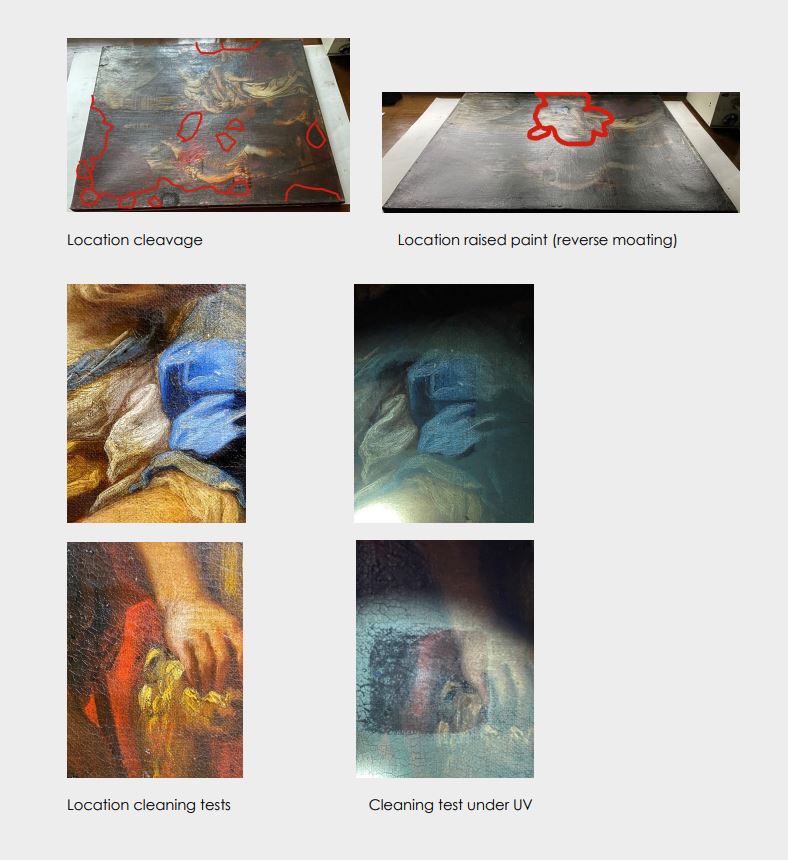
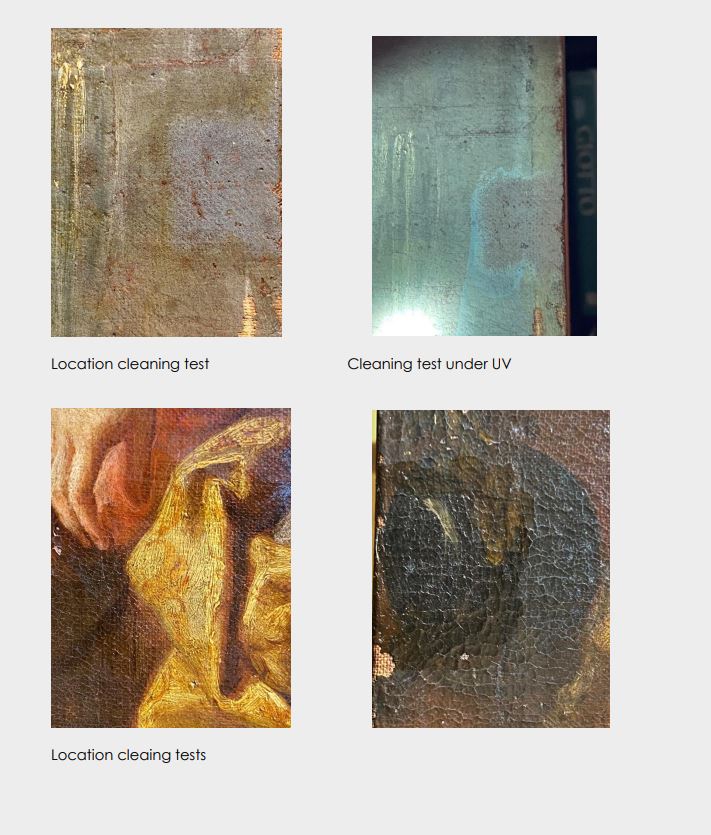
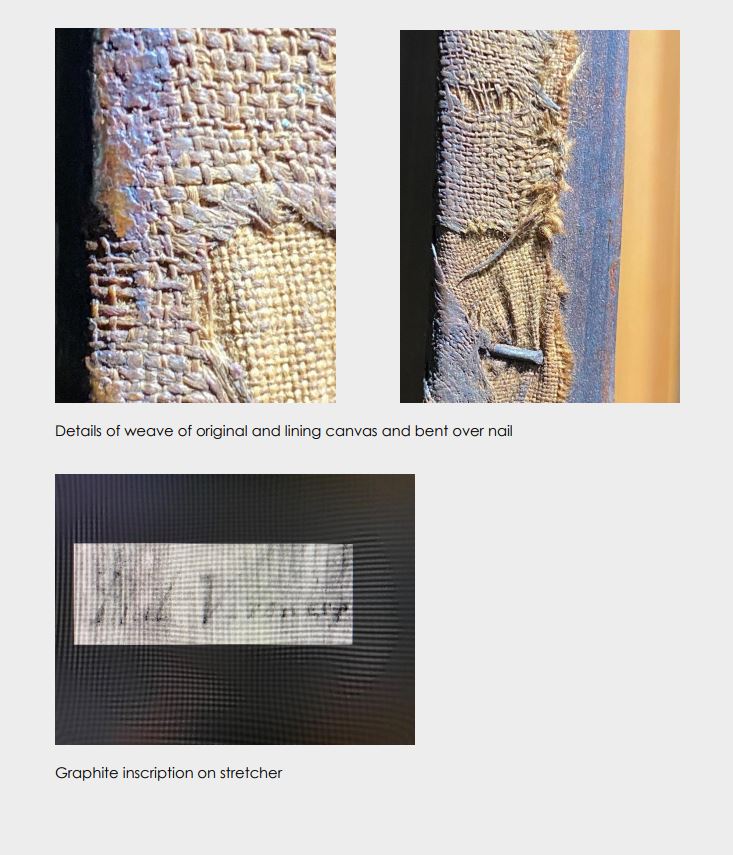
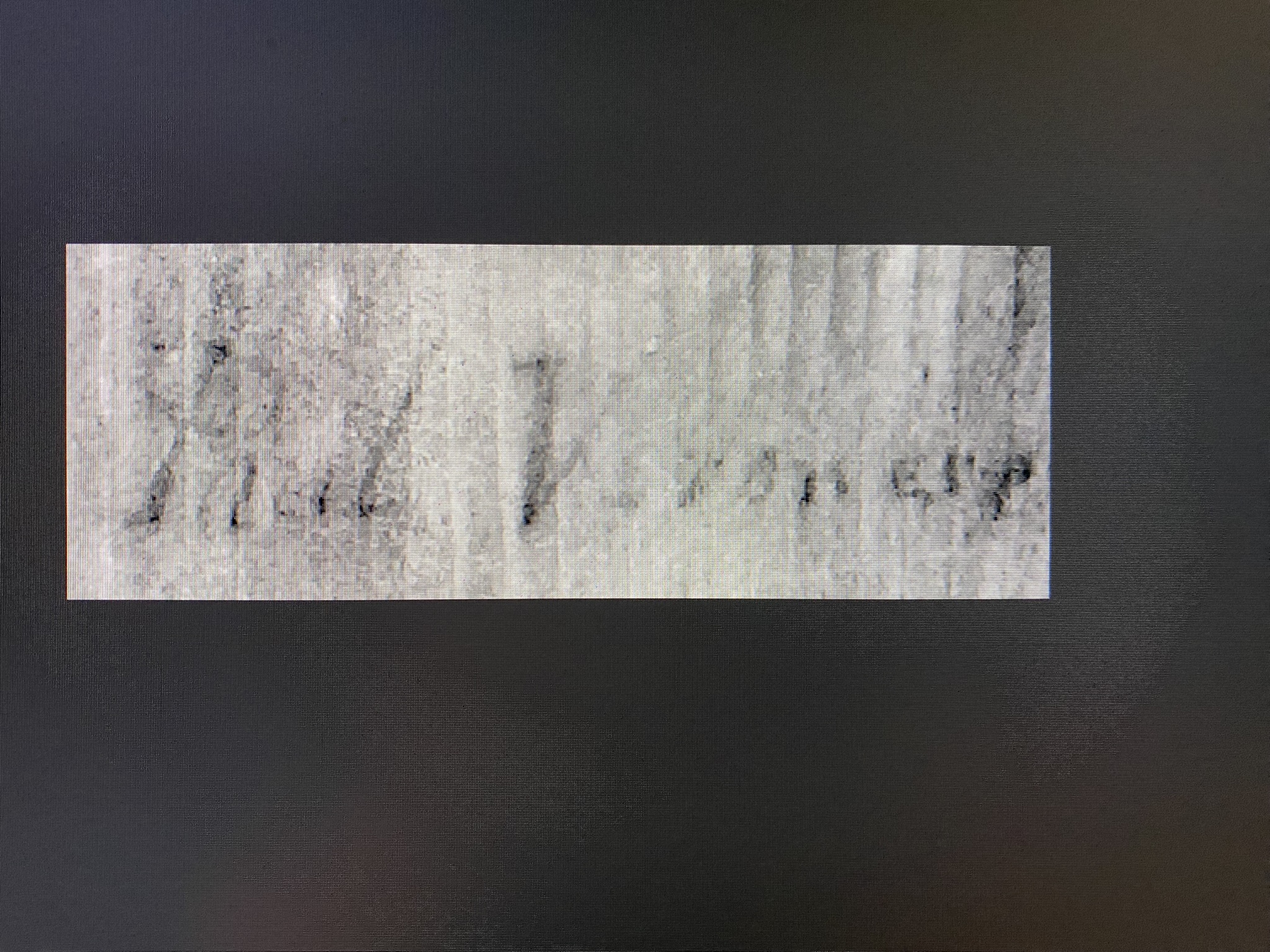
6. Pencil on canvas stretcher revealed by UV light. This Pencil inscription seems to read Paul Veronese. It may refer to the artist Paolo Caliari (Veronese) (1528-1588). Due to the supposed dates of the painting, it is unlikely that Veronese was the artist. However, it is very likely that someone along the way thought it was or tried to sell it as a Paul Veronese. (Likely French, English or Dutch based on the spelling and likely pre-1964 based on the handwriting, fading of the pencil graphite and lack of mention of it in any of the documents from 1964 on)
[1] Confirmed by Documents below.
[2] A similar subject, depicted in this way, is the Queen of Sheba before Solomon. However, there is typically gifts, treasure, etc. that the queen brings as a gift to Solomon. In the absence of this, we could conclude Esther as the subject. According to the current conservation report the canvas might have been cut down slightly, but likely not by more than a few inches, making the addition of elephants, trunks of gifts, gold, etc that the Queen of Sheba would have brought unlikely.
[3] Documents confirm these dates.
[4] This information is confirmed in the conservation report from March 2023 and the supposition is based on techniques used to restore paintings during the 19th century.
[5] Because it is on the frame, it could be referencing a different painting. This is less likely as a) the label indent matches the stretcher in the left corner and it is fairly unlikely that one person owned a painting of exactly the same size that was also an Italian work.
[6] Obviously, we cannot know if Lester Cooke wrote the attribution of Romanelli or not. Be he did sign his name to the document and in 1964, Lester Cooke had just recently organized an exhibition of Romanelli works.
 Caroline Haller Curation